
What is Liberatory Design?
Liberatory Design is an evolution of the design thinking methodology that equips designers to design in highly complex and ever-changing settings. To design in today’s world requires an understanding of systems, complexity, human relationships and beyond!
Three-Part Approach
Modes
The Modes are tangible phases that guide us as we apply the framework in our daily design work. They help us identify what’s needed next and guide us to insight and action.
Mindsets
The Mindsets define the WHY and HOW of design practice. To create just outcomes, we have to design differently. Mindsets articulate core values and assess how we’re doing.

Tools
When we’ve built a strategy and committed to mindsets, tools help us bring them to life through action. While the work of liberation is complex, there are some things we can start doing right away.


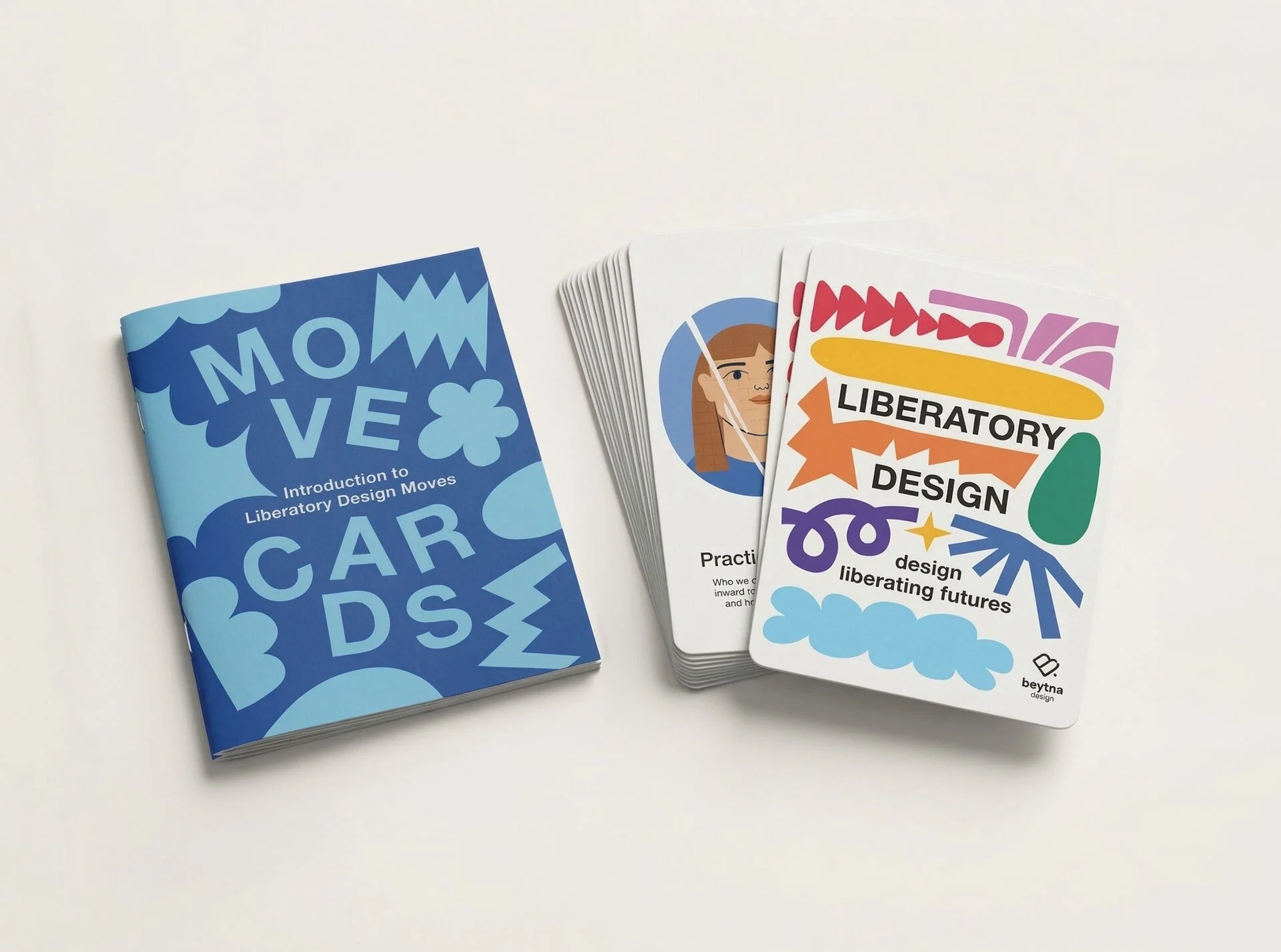
Liberatory Design is the backbone of Beytna Design.
We teach it to our clients and use it when customizing our own services.
“Liberatory design helps us translate our why into a what. It becomes the bumper lanes that help us become more just practitioners at the same time that we are catalyzing game-changing outcomes.“
—Tania Anaissie
The Modes of Liberatory Design
Modes as Guides
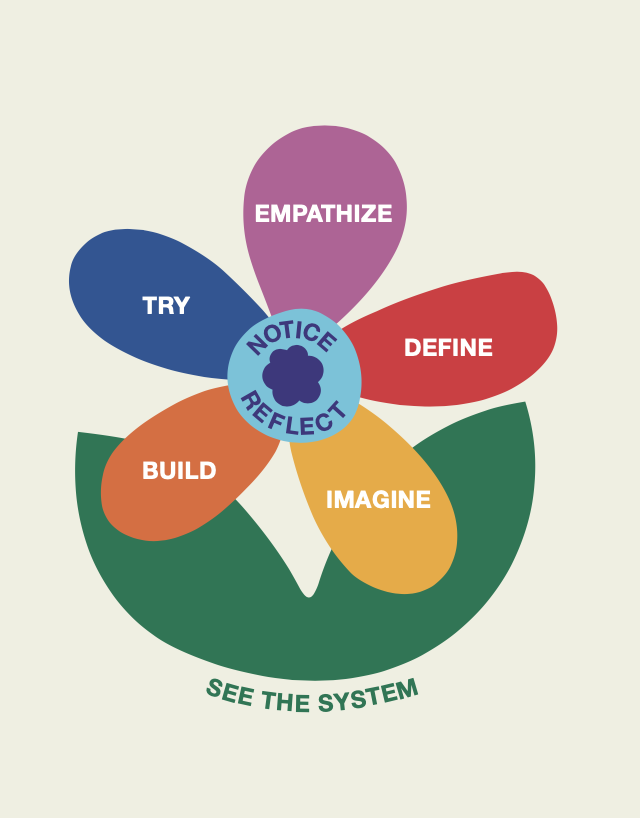
The Modes do not have to be practiced linearly. You select where to go next based on what’s needed. At all times, we center Notice and Reflect. They ground us in historical and current context, foster self-awareness, and support continual growth through reflection.
See the System invites us to look beyond our immediate challenge to understand what incentives and barriers contribute to it.
Empathize seeks to understand the experiences, emotions, and priorities of communities we partner with. Define outlines the core challenges clearly, grounded in community voices.
Imagine gives permission to dream-up drastically different futures. Build and Try translate our concepts into tangible artifacts that we can share to learn more.
How is it different?
Liberatory Design is an evolution of design thinking. It integrates best practices from complexity theory, systems thinking, power studies, community organizing and more. It equips designers to practice more effectively and ethically in today’s ever-changing world. Liberatory Design…
Understands and works with power imbalances
Recognizes incentives and barriers within systems
Examines history and legacies of impact
Can operate in low-trust environments through seeking repair
Recognizes those most impacted as experts and partners
Leans into co-design and community ownership
Invests in harm reduction
Works in ways that are “safe-to-fail”
Honors existing work and relationships
Moves at the speed of trust
Invests in capacity-building